

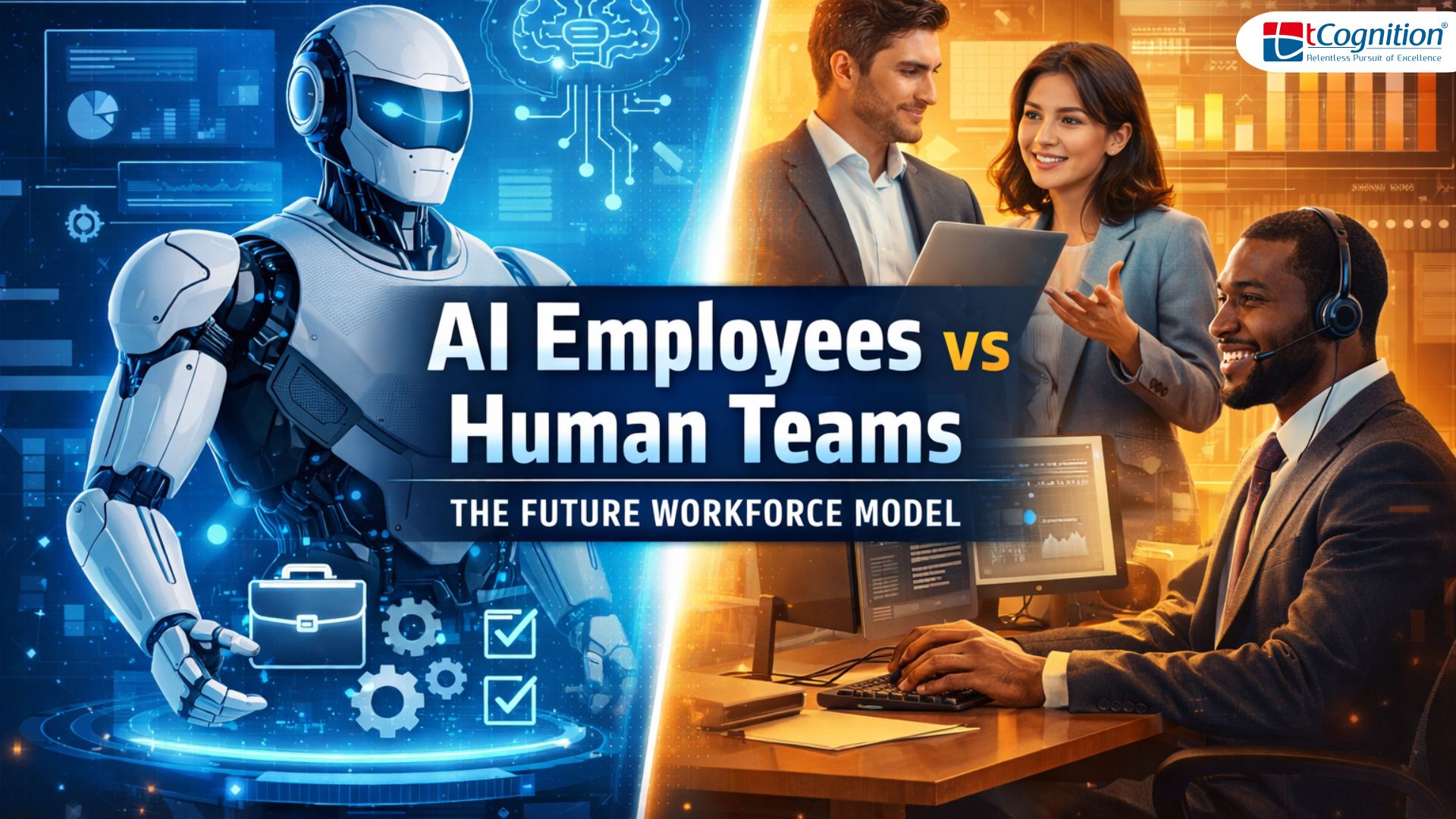
Artificial Intelligence is transforming how organizations operate. Businesses are increasingly adopting AI-powered digital workers, also known as AI employees, to automate tasks, analyze data, and manage workflows.
As AI continues to evolve, many organizations are asking an important question:
Will AI employees replace human teams, or will they create a new workforce model?
The answer lies in understanding the strengths of both and how they can work together to drive productivity, innovation, and efficiency.
What Are AI Employees?
AI employees are software systems powered by artificial intelligence that perform tasks traditionally handled by humans.
Unlike basic automation tools, AI employees can:
-
Process and analyze large datasets
-
Learn from patterns and improve over time
-
Communicate through chat interfaces
-
Execute complex workflows
-
Make real-time operational decisions
Examples of AI employees include:
-
AI customer service assistants
-
AI marketing automation systems
-
AI-powered data analysts
-
Autonomous IT monitoring systems
-
AI sales assistants
These digital workers operate 24/7 and can scale instantly, helping organizations increase efficiency and productivity.
Benefits of AI Employees for Businesses
1. Increased Productivity
AI employees can handle repetitive tasks such as data processing, report generation, and customer queries much faster than humans.
2. Lower Operational Costs
Businesses can reduce costs by automating tasks that previously required large teams.
3. Scalability
AI systems can manage thousands of tasks simultaneously, enabling companies to scale operations without expanding workforce size.
4. Data-Driven Decision Making
AI employees analyze large datasets quickly, helping businesses make informed decisions based on real-time insights.
Strengths of Human Teams
While AI is powerful, human employees remain essential in many areas of business operations.
1. Creativity and Innovation
Humans excel in strategic thinking, product innovation, and creative problem-solving.
2. Emotional Intelligence
Human communication and empathy are critical in leadership, negotiations, and customer relationships.
3. Ethical and Strategic Decisions
Complex decisions involving ethics, regulations, and company culture require human judgment.
4. Adaptability
Humans can quickly adapt to new situations, unexpected challenges, and evolving market conditions.
The Rise of the Hybrid Workforce
The future of work is not AI versus humans, but AI working alongside humans.
Many companies are adopting a hybrid workforce model, where AI employees handle repetitive and data-intensive tasks while humans focus on strategic and creative work.
Example of Hybrid Workforce
| Business Function | AI Employees | Human Teams |
|---|---|---|
| Customer Support | Chatbots and AI assistants | Complex issue resolution |
| Marketing | Data analysis and campaign automation | Strategy and branding |
| Finance | Fraud detection and forecasting | Financial planning |
| IT Operations | System monitoring and alerts | Infrastructure architecture |
This model allows organizations to increase efficiency while maintaining innovation and human insight.
How Enterprises Are Using AI Employees Today
Many enterprises are already deploying AI employees across departments.
Customer Service
AI chatbots and virtual agents manage large volumes of support requests.
Marketing
AI systems analyze customer behavior and optimize campaigns.
IT Operations
AI monitors infrastructure and detects potential system failures before they occur.
Finance:
AI tools identify fraud patterns and improve financial forecasting.
These applications help businesses reduce costs, improve efficiency, and deliver better customer experiences.
The Future Workforce Model
Experts predict that within the next decade:
-
Most enterprises will deploy AI-powered digital workers
-
Employees will collaborate with AI assistants and intelligent agents
-
Businesses will rely heavily on AI-driven decision support systems
Organizations that successfully integrate AI with human teams will gain a significant competitive advantage in productivity and innovation.
Conclusion
AI employees are transforming the modern workplace. While artificial intelligence can automate many operational tasks, human expertise remains essential for leadership, creativity, and strategic decision-making.
The future workforce will be built on collaboration between AI systems and human teams, enabling organizations to achieve greater efficiency while maintaining innovation and human-centered thinking.
Businesses that begin adopting this hybrid workforce model today will be better prepared for the AI-driven economy of the future.